In my last roundup, I described how using Plex as my primary music portal in the house has subtly changed my listening habits. Most prominently, I compiled some playlists using the year-end “best of” postings on this blog - one for each year since I started posting in 2011. Although I still prefer listening to full albums, making these lists was pretty satisfying and provided me with a plan of attack for expanding the library on my computer.
Then, dangerously, I got to thinking: would it be possible for me to reconstruct my listening history and memory episodes well enough to retroactively create a top ten list for a year without a formalized "best-of" list to go by? If so, how far back could I go?
Well, the blog started in 2011 as a way to satisfy the writing addiction that I had generated during my master's thesis. Its seeds, however, were actually sown way back in the early 00’s, when I was a decently ranked Amazon reviewer. Using these prototypical postings as a starting point, I was able to assemble pretty satisfying lists that stretch all the way back to 2000.
To set the stage, it is worth mentioning that the progressive rock “supergroup” Transatlantic released their debut album SMPTe in 2000. Although it did not make the top 10, the album had a huge impact on my listening habits that year. My investigations into Transatlantic led me down a virtual prog rock rabbit hole. The list reveals that I was clearly in the throes of this “progressive rock renaissance” in 2000. There was also a smattering of power pop, local, and alternative music, which were the primary strands I was following at the turn of the century.
10. Spock’s Beard - V: By 2000, I had already ordered all of Spock’s Beard’s back catalog from progressive rock websites. In some ways, V felt like a culmination of all of their work, and served as the template for Neal Morse’s contributions to Transatlantic.
9. Radiohead - Kid A: For a good portion of 2000, I theorized that if The Bends was Radiohead’s Joshua Tree, and if OK Computer was their Achtung Baby, then Kid A could be their Zooropa, which was not intended to be a compliment. Time has shown this analogy to be foolhardy, however, and Kid A ended up launching the band on a creative trajectory that informs their path even today.
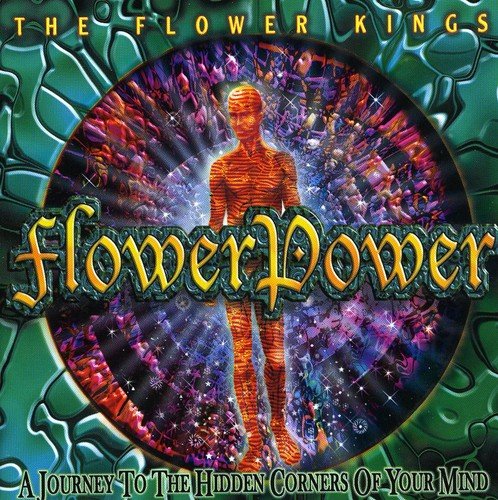
8. The Flower Kings - Flowerpower: This was one of the albums that Transatlantic led me to, and was my introduction to the group. At over two hours of music, it’s a lot to take in at once, but in terms of quality material it stands as one of my favorite Flower Kings releases.
7. King Crimson - The ConstruKCtion of Light: The detuned vocals that opened lead track “Prozac Blues” clearly announced that this would be a unique iteration of Crimson. Once the initial shock wore off, however, The ConsctruKCtion of Light proved its legitimacy in the band’s catalog.
6. Aimee Mann - Bachelor No. 2: I admit that my reception of this album was a bit lukewarm in 2000, mainly because I was disappointed that Jon Brion’s (whose work I was obsessed with thanks to The Greys) fingerprint was not as prominent as it had been on its predecessor I’m With Stupid. Time has been incredibly kind to it, though, and although clearly being associated with the year 2000 in my mind, Bachelor No. 2 has also transcended this time, earning “classic” status.
5. Kevin Gilbert - The Shaming of the True: This is an incredibly heartfelt rock opera by one of the industry’s most tragically unrecognized musicians. Gilbert passed on before it was completed, but Nik D’Virgilio of Spock’s Beard compiled and released it posthumously, allowing Gilbert’s unique genius to shine brightly one last time.
4. Porcupine Tree - Lightbulb Sun: I was gobbling up Porcupine Tree during this period, and I know that I also was into The Sky Moves Sideways, Signify, and Voyage 34 in 2000. Lightbulb Sun, the immediate successor to the pristine Stupid Dream, was the standout.
3. Dream Theater - Scenes from a Memory: This still stands in my mind as Dream Theater’s finest moment, where it seemed as if they might evolve into something beyond prog-metal. Alas, they fell into the trap of their own nostalgia and have never quite recapture the magic of this great rock opera.
2. The Flaming Lips - The Soft Bulletin: In 2000, this album was nothing short of magical. I spent a whole summer driving around Denton with this gleefully blasting out of my car windows.
2000 Album of the Year
1. Chomsky - A Few Possible Selections for the Soundtrack of Your Life: If you were around me at all in early 2000, I guarantee that I tried to get you to listen to this album. I loved everything about it - its energy, its angularity, its quirkiness, its intelligence, and its surreal album art.
My PS3 had been dying a slow death for over a year, and somewhere during the move to Denton it finally bit the dust. Although I don’t game very much, I used the console as the central entertainment unit in our house for playing music and streaming video. I embedded a PS4 in our move-in purchases and was horrified to find the PS4 doesn’t support the CD format - at all. There is a Blu-Ray player on the console that is entirely capable of reading music CDs, but it just doesn’t.
My past method of uploading CD’s into the console hard drive for play in the house simply would not work, and this was a very serious problem of the first-world variety. I have known for a long time that the CD is a dying format, but to suddenly not be able to play them in the house at all seemed unconscionable. Due to limited libraries and unethical artist compensation policies, I refused to submit to Spotify or Amazon Prime. I just needed access to my own library. After quite a bit of soul-searching and scrolling through PS4 forums, the answer came in the form of an app called Plex.
Plex allows me to use my computer as a media server and stream my music straight to the PS4, giving me open access to all the music on my computer. Not only that, it painlessly and beautifully organizes albums, displays cover art, and manages playlists. Despite having a few minor bugs, Plex really changed the game for me. I uploaded the entire Superhero Theme Project, complete with track-specific images, and created playlists based on my end-of-year best of posts from the last six years.
Over Spring Break, I ripped CDs to my computer with the renewed vigor of a full-fledged music nerd. Several of these albums are currently in rotation in the car, which represents my listening since my birthday. My birthday was actually at the end of January but, due to some date confusion, I got a second stack of albums at the end of February, too. Not a bad deal.
The Flaming Lips - Oczy Mlody: There is a lot to like about the album, but it wanders. I am still not sure if The Flaming Lips’ current direction has a larger point to make that I just haven’t locked into or if they are just being weird for the sake of being weird.
Run the Jewels - RTJ3: RTJ3 definitely picks up where its predecessor left off, but doesn’t seem to have the standout tracks that kept me coming back to RTJ2. It took me months to really appreciate RTJ2, however, so I will let this one simmer for a while.
The Neal Morse Band - The Similitude of a Dream: I am a huge fan of Neal Morse but, paradoxically, not a devoted follower of his solo work. This album garnered great critical praise, most of which is deserved, but there are a few “tribute band” moments that I have to accept.
The xx - I See You: The xx’s debut album played a big, big role in my soundtrack for 2010, but the follow-up Coexxist seemed like more of the same, but not quite as good. I See You doesn’t change the formula, but it does contain enough new elements to stand on its own and still capture the vibe that made their debut so great.
Gaye Su Akyol - Hologram Imperatorlagu: Really great Turkish artist that very effectively syncretizes Western rock and traditional ideas. David Lynch should pick her up as his new chanteuse.
The Dirty Projectors - Dirty Projectors: The mixed reviews that this album have received are, unfortunately, well deserved. Mixed is the key - it teeters between jumbled genius and obvious self-indulgence, which runs counter to the consistency of its predecessor.
Astronoid - Air: Stumbled across this “dream thrash” group and have been really impressed with it after several listens. Its Mew meets Deafheaven vibe is pretty unique amongst my listening right now.
Jóhann Jóhannsson - Arrival OST: Knowing that I will most likely watch this movie sometime, I looked into this soundtrack and discovered that Jóhannsson is a pretty interesting composer with an intriguing body of work. While the Arrival soundtrack may not reach the great heights of Interstellar, it immediately commanded my attention and has held it for weeks.
The Proper Ornaments - Foxhole: This album sits at the crossroads of pre-Dark Side of the Moon Pink Floyd and late 90s power pop mush. It’s an entertaining background listen, but doesn’t offer up much in the way of innovation.
The Devin Townsend Project - Transcendence: I gained respect for Devin Townsend’s vocal talents way back when he sang lead for Steve Vai’s ill-fated “Vai” group. Here he is unapologetically epic and bombastic in all the right ways.
United Vibrations - The Myth of the Golden Ratio: Like its name implies, Universal Vibrations gets all of their influences into just the right balance to create something exciting and distinctive. It has the jazzy, political rock side of Dream of the Blue Turtles, but with a distinctive Afrobeat flavor.
Yussef Kamaal - Black Focus: An engaging foray into contemporary jazz/soul/funk that shared quite a bit of airtime in the house during Spring Break. I am looking forward to a more focused listening in the coming weeks.
I watched Obama’s election as I was moving to Austin from Carrollton with no small amount of anticipation and excitement, and when he won the Presidency the world felt different. Although might have been inexperienced at the time, I had some conviction that he had the best interests of the country at heart, an opinion that did not change much during his tenure. I was proud to be an American and was genuinely hopeful about the future.
This inauguration, conversely, filled me with dread. I felt, and still feel, anxious about the natural and social environment that my kids will be looking at in the near and far future. Like many, I have traveled through stages in dealing with this new reality, so during my denial phase I made it my goal to avoid the inauguration entirely to keep the ratings down. This may seem escapist, but I justified it by showing my lack of support in any way possible. The same weekend, I put Oczy Mlody in rotation.
There seemed to be no better way to escape reality than to sink into the soft non-euclidean psychedelia of The Flaming Lips. Very few bands have been able to retain both a modicum of visibility and the kind of artistic freedom that The Flaming Lips enjoy. They could literally put out an album of duck sounds and people would at least take notice. That being said, I was on the fence about this one.
In the band’s primary narrative, there has been an attempt to collapse their experimental side with mainstream songwriting in search of a singular, cohesive statement. This, I like. Simultaneously, however, they have been diversifying in ways that aren’t as convincing, releasing shark-jumping cover albums and collaborations. Despite my long-term investment in the band, these recent releases made me consider taking a pass on Oczy Mlody. The video for The Castle, however, immediately sold me.
Oczy Mlody is the first “proper” Flaming Lips album since The Terror, which took darker themes and washed them over with buzzy experimentalism. In comparison, Oczy Mlody juxtaposes brighter, trippy songs against psychedelic sound experiments. This approach allows them to incorporate a broad spectrum of sounds that they have explored in other non-traditional formats, from multi-jambox CD releases to flash drives released in gummi skulls.
But I see The Flaming Lips as primarily an album band. For decades, they have released consistently coherent recordings that are best digested as a whole, rather than as a collection of singles. Oczy Mlody is impressively strong in this regard. Paradoxically, however, the individual parts that make up the album feel less focused. There are a few songs that emerge from the experience, but these are surrounded by floating ambient sound experiments, fuzzed-out jams, and spaghetti-western guitar themes.
Although some critics have taken exception to the album’s lack of clear boundaries, my increased interest in instrumental music and soundtracks may have enriched my appreciation of Oczy Mlody. It doesn’t feature the standout melodies of some of their earlier works, but in terms of texture and flow, it’s still quite convincing. At the same time, although it seems that the band is focusing more in being weird than making a clear statement, there does seem to be a coherent narrative that lies beyond the songwriting upon which they built their image.
When the Mars rovers made planetfall, it reignited my childhood interest in the space program. For a brief period after Spirit and Opportunity set down in 2004, I surfed around the internet looking for other successful extraterrestrial touchdowns and found out that nearly thirty years prior, Russia’s Venera 9 successfully sent back surface pictures of the inhospitable surface of Venus. My imagination, fueled by a lifetime of fanciful sci-fi and computer-enhanced images, ran wild about what might actually be brewing underneath the planet’s thick, sulfuric atmosphere. The lander barely lasted an hour before it was reduced to slag, but it managed to return this panorama.
Great. More rocks. It could have been taken from a dried-up creek bed.
Although the reality is not as fanciful as my imagination might have been, these are still extraordinary pictures. They are particularly amazing framed as they are the Cold War space race, when first steps onto other worlds began unlocking the unbelievable realities that were previously relegated to fantasy.
Judging from the buzz around The Terror, I expected it to be similarly bleak. The Flaming Lips’ previous release Embryonic, which was a personal favorite album in 2009, intentionally moved away from the sunny shimmer of Yoshimi Battles the Pink Robots and the classic Soft Bulletin.As predicted, The Terror continues its predecessor’s exploration of the Lips’ darker side For me, it brings to mind the time when 70s science fiction was televised through the now- archaic medium of UHF and VHF radiowaves. I remember a lot of sci-fi from that time, like Planet of the Apes, Space 1999, and Jason of Star Command, through a wavy, oversaturated lens.
These grainy memories resonate with the then-futuristic overtones of the now-ubiquitous Moog synthesizer. The Terror capitalizes on the sense of post-apocalyptic desolation hidden within the cultural memory of these timbres, like a message sent by a Venusian castaway, inexplicably living within the inhospitable ruins of an impossible civilization. It obliquely outlines the axis upon which a person begrudgingly accepts loneliness in order to survive, relating this experience though homesick phone calls blurred with static and yearning. There is a certain peace that may come when this kind of separation is accepted, but The Terror is not pretty enough to be peaceful, nor is it ugly enough to be bitter. It is the soundtrack to the liminal space between these two states of being.
These are hardly the impressions that made The Flaming Lips popular. In their more public side, the Lips have historically been uplifting either musically or lyrically, if not both. Like Daft Punk’s most recent album, however, The Terror is a challenging release, but it’s probably not a surprise to the dedicated Flaming Lips’ fan. While their more definitive albums were able to balance the cosmic positivity of Yes with the unsettling lunacy of Pink Floyd, they have always harbored an experimental and dark side. The Terror puts this aspect of the Lips on prominent display. It’s not a change in modality as much as it is a change in tone, which may make it a hard sell. Its is, however, a decisively cohesive and successful artistic statement, and certainly worth deeper scrutiny.
Two summers ago, I took a Japanese language course, which was horizon-expanding. Last summer, CrossFit was a bit more globally life-changing. This year’s summer project wasn’t as intentionally planned as those at the outset, but it is emerging, nonetheless: roll around on the floor with my baby daughter and try to see the world through her eyes. As we are discovering that drink coasters have a front and a back and that bubbles don't hurt when they pop, I keep finding the tuneful, psychedelic, but ultimately positive, music of the Flaming Lips to be somehow appropriate.
One evening, I noticed that the Little One seemed to have an affinity for The Yeah Yeah Yeah Song, so we adopted this as our daily breakfast jam. I’m pretty sure that she is starting to sing parts of the song in her own 10 month-old way. It’s pretty cute – even cuter than the hilarious video.
In my opinion, the most classic album by the Flaming Lips is The Soft Bulletin, which I got into through my Aiki Brother (happy birthday, by the way!).This album has its own story for me that I will one day recount, but it is worth mentioning here because its impact made it difficult for me to accept their subsequent releases on their own merit. Even though I loyally purchased all the Flaming Lips albums that followed, for a long time, nothing they did ever seemed as good as The Soft Bulletin. When Embryonic was released in 2010, however, and I saw them play live in Denton that summer, I decided that I had done them an injustice by dismissing their back catalog.
At War With the Mystics is an album that was lost in the fog, so it didn't click for me when it was released. After using it to announce the day nearly every day for the past three weeks, however, it has become clear that the entire album is permeated with a glorious, cosmic genius that only the Flaming Lips can generate. While it is not quite as streamlined as The Soft Bulletin, it certainly has a succession of amazingly musical moments. Some of these are quite arresting, while others take the form of soft, delicate interludes conjured from layers of acoustic guitar and mellotron. In different listening environments, like the car, where I usually listen to music, these more sensitive sections might have been easily overlooked.
For all their well-publicized musical experimentation, stuntwork, and overall weirdness, ultimately, the Flaming Lips are deeply musical, and can embed a simple song within a stunning atmosphere of musical grandeur. The spectacle of their live performance similarly juxtaposes larger-than-life imagery against intimate songcraft, and was what convinced me of their genius. The Flaming Lips' unique brand of psychedelia somehow avoids being too derivative of Pink Floyd and other past masters. It is distinctly their own, and really must be seen to be believed.
Overall, At War With the Mystics is a richly textured soundtrack to a morning spent with the Little One. While advocates of the disproven "Mozart Effect" might take exception to my choice of music, there is a playfully creative demeanor at the core of the Flaming Lips musical concept that I hope my Little One will one day find inspiring. For now, I happily accept her exclamation "YAYAYAYAYA" as a request to sing.




 Great. More rocks. It could have been taken from a dried-up creek bed.
 At War With the Mystics is an album that was lost in the fog, so it didn't click for me when it was released. After using it to announce the day nearly every day for the past three weeks, however, it has become clear that the entire album is permeated with a glorious, cosmic genius that only the Flaming Lips can generate. While it is not quite as streamlined as The Soft Bulletin, it certainly has a succession of amazingly musical moments. Some of these are quite arresting, while others take the form of soft, delicate interludes conjured from layers of acoustic guitar and mellotron. In different listening environments, like the car, where I usually listen to music, these more sensitive sections might have been easily overlooked.