Showing posts with label King Crimson. Show all posts

Monday, September 6, 2021

black midi and the Crimsonesque Qualities of Cavalcade

 Review and discussion on black midi’s 2021 album Cavalcade, with an eye on the common ground between their aesthetic and prog-rock legends King Crimson.

Relevant Links:

Previous post on Schlagenheim

Previous post on King Crimson’s recent tour and the 71 album Islands

Black midi in black midi by Patrick Fitzroy

Talkhouse Podcast with Morgan Simpson and Bill Bruford

Saturday, August 7, 2021

King Crimson: Live and on Islands

Review and discussion on King Crimson’s 1971 album Islands and their 2021 Music is Our Friend tour.


Relevant Links

King Crimson 2017 playing Starless

King Crimson 2017 playing Indiscipline

Islands, from 1971

Wednesday, November 22, 2017

The Auspicious Toss: 2017's Final Roundup

Since O came into the world, I have not posted very often on individual albums, but I have remained diligent in keeping track of what albums I have been listening to and with what frequency.  As a result, 2017’s roundups serve as a pretty complete document of my listening this year.  There is a small gap, however, that began in September and ends now, in mid-November, that I still need to document.  These final albums are the last contenders for my 2017 favorites.  


Grizzly Bear - Painted Ruins:  From a songwriting standpoint, Painted Ruins is perhaps a bit less memorable than Grizzly Bear’s previous albums.  In the end, however, its sonic characteristics push their sound to its most theatrical and refined iteration, making for a consistently engaging listening experience.

Steven Wilson - To the Bone:  Wilson’s most recent effort is an intentional break from the progressive masterworks that have defined his solo work.  It is, instead, a somewhat inconsistent but successful move towards a more concise and accessible sound.

Twin Peaks: The Return OST:  The soundtrack to the recent Twin Peaks series is as effective in representing the show as its predecessor.  That doesn’t mean, however, that it is necessarily an easy or accessible listen as much as it is an intriguing one.

Twin Peaks: Songs from The Return:  I am usually ambivalent about curated soundtracks, but my quest for answers to the myriad questions posed by the new Twin Peaks piqued my interest.  Of course, it doesn't provide any obvious answers, but it does reveal the subtle influence that Lynch’s work has exerted on popular music.

Kaitlyn Aurelia Smith - The Kid:  Smith’s last album immediately grabbed my attention and blew my mind, and I was concerned about her capacity to follow it up.  With its linear narrative and streamlined song structures, The Kid is a worthy successor.

Geinoh Yamashirogumi - Akira Symphonic Suite:  My current interest in soundtracks landed the rerelease of the Akira OST in rotation on an impulse.  Although I have seen the movie several times, I did not remember it being so “world-fusion” in execution, and I certainly did not realize that it was written and conceived by such a fascinating collective of musicians.

Lunatic Soul - Fractured: Lunatic Soul has been on my wishlist since the KScope Sampler a couple of years ago.  Positive reviews on this most recent release forced my hand, and it has not disappointed.

King Crimson - Starless and Bible Black:  I was fortunate enough to see King Crimson on their most recent tour, and in the process of preparing myself I spent a little time reviewing their back catalog.  This is a gem from the John Wetton era that I have often overlooked but that has taken on new life in the wake of the concert.

Mark Mothersbaugh - Thor: Ragnarok OST: Mothersbaugh’s (of Devo fame) name caught my attention, but a cursory listen really got me excited.  Thor: Ragnarok is a compelling blend of orchestral grandeur and retro-synth mayhem that really hit me where I live.

Monday, April 24, 2017

Flashback to the Oughts: 2003

The trials of 2002 left me somewhat adrift, but by 2003, I started making some long-term goals for myself. The biggest one of these was the acquisition of a Chapman Stick, which I began relentlessly shedding on as a form of therapy. I felt like I had an intensely clear vision for the instrument, and I was determined to become its master.

I moved into a one bedroom apartment off the Denton square with a new, more secure sense of self. I experimented with bachelorhood and dated around a little while. When I stopped trying so hard, I found myself in a positive relationship that continues to evolve to this day (love ya, dear!).


In retrospect, however, my attitude had a selfish undercurrent that would later manifest into some negative behaviors. Regardless, it is fair to say that I was in a much better place than I had been in a long time.  As a result, the 2003 best-of list is generally more upbeat in tone than the one from 2002.


10. Magma - Mekanik Destruktiw Kommandoh:  But first, nothing acknowledges that sinister, self-indulgent side more than Mekanik Destruktiw Kommandoh, which sounds like what would happen if Frank Zappa was commissioned to write a Klingon Opera. Clearly not the most lighthearted entry for 2003, but its virtuosity and electrifying performances kept it in rotation for a good part of the year.


9. The Darkness - Permission to Land: I realize The Darkness was a one-trick pony, but the trick was really, really good.  Permission to Land was both a reverent commentary on what was great about 80’s hair metal and an irresistible collection of fun, crunchy songs.


8. O.S.I. - The Office of Strategic Influence: One of Mike Portnoy's many side projects, this one with ex-Dream Theater keyboardist Kevin Moore and Fates Warning guitarist Jim Matheos. O.S.I. captured a broader spectrum of moods and textures than the prog-metal pedigree of its lineup might suggest.


7. Owsley - Owsley: William Owsley only recorded a couple of albums before his apparent suicide in 2010. A look as his resume shows him to be an incredibly talented songwriter and session musician, but a listen to his album reveals him to also be tragically overlooked as an artist in his own right.


6. Radiohead - Hail to the Thief:  Radiohead had been toying with a more electronic sound for awhile by the time Hail to the Thief came out, so I found its more prominent use of guitar alluring.  It certainly did not recapture the magic of OK Computer or The Bends, but it felt more like Radiohead “the band” than Radiohead “the project.”


5. Tsar - Tsar:  I ran across several inspiring power pop albums in 2003, and Tsar was among the best.  It, along with Sugarbomb’s Bully, rekindled my belief that the style was still alive, well, and surprisingly affordable through the Amazon Marketplace.


4. The Mars Volta - De-Loused in the Comatorium:  This little piece of nu-prog chaos came out of nowhere and, in any other year, probably would have taken album of the year.  In any case, the success of this album would propel my interest in The Mars Volta throughout the rest of their career.


3. Kevin Gilbert - Thud:  If there was any question as to the incredible depth of Kevin Gilbert’s unique genius after his posthumous rock opera The Shaming of the True, Thud lays it to rest.  While his unique progressive pop style obviously resonated with me, I found Gilbert’s lyrics refreshingly genuine and, at times, devastatingly honest.


2. Sugarbomb - Bully:  I often perceived Tsar as the B-side to this amazing and overlooked gem.  Bully, with its ebullient energy, bittersweet lyrics, and excellent production, was in constant play throughout this year and well into the next.


Album of the Year: 2003
1. King Crimson - The Power to Believe: King Crimson’s final studio album is, I feel, still one of their best.  Where The ConstruKCtion of Light was a bit obvious in the way it aligned itself with the band’s back catalog, I would argue that The Power to Believe captured the essence of the band’s past successes and forged an entirely new interpolation of the group.  

Saturday, April 8, 2017

Flashback to the Oughts: 2000

In my last roundup, I described how using Plex as my primary music portal in the house has subtly changed my listening habits. Most prominently, I compiled some playlists using the year-end “best of” postings on this blog - one for each year since I started posting in 2011. Although I still prefer listening to full albums, making these lists was pretty satisfying and provided me with a plan of attack for expanding the library on my computer.

Then, dangerously, I got to thinking: would it be possible for me to reconstruct my listening history and memory episodes well enough to retroactively create a top ten list for a year without a formalized "best-of" list to go by? If so, how far back could I go?

Well, the blog started in 2011 as a way to satisfy the writing addiction that I had generated during my master's thesis. Its seeds, however, were actually sown way back in the early 00’s, when I was a decently ranked Amazon reviewer. Using these prototypical postings as a starting point, I was able to assemble pretty satisfying lists that stretch all the way back to 2000.

To set the stage, it is worth mentioning that the progressive rock “supergroup” Transatlantic released their debut album SMPTe in 2000. Although it did not make the top 10, the album had a huge impact on my listening habits that year. My investigations into Transatlantic led me down a virtual prog rock rabbit hole. The list reveals that I was clearly in the throes of this “progressive rock renaissance” in 2000. There was also a smattering of power pop, local, and alternative music, which were the primary strands I was following at the turn of the century.


10. Spock’s Beard - V: By 2000, I had already ordered all of Spock’s Beard’s back catalog from progressive rock websites. In some ways, V felt like a culmination of all of their work, and served as the template for Neal Morse’s contributions to Transatlantic.


9. Radiohead - Kid A: For a good portion of 2000, I theorized that if The Bends was Radiohead’s Joshua Tree, and if OK Computer was their Achtung Baby, then Kid A could be their Zooropa, which was not intended to be a compliment. Time has shown this analogy to be foolhardy, however, and Kid A ended up launching the band on a creative trajectory that informs their path even today.


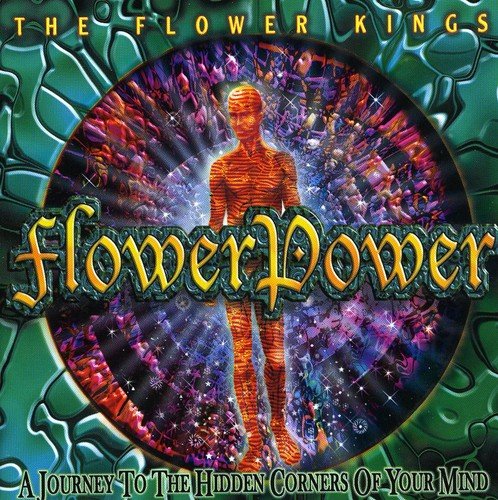
8. The Flower Kings - Flowerpower: This was one of the albums that Transatlantic led me to, and was my introduction to the group. At over two hours of music, it’s a lot to take in at once, but in terms of quality material it stands as one of my favorite Flower Kings releases.


7. King Crimson - The ConstruKCtion of Light: The detuned vocals that opened lead track “Prozac Blues” clearly announced that this would be a unique iteration of Crimson. Once the initial shock wore off, however, The ConsctruKCtion of Light proved its legitimacy in the band’s catalog.


6. Aimee Mann - Bachelor No. 2: I admit that my reception of this album was a bit lukewarm in 2000, mainly because I was disappointed that Jon Brion’s (whose work I was obsessed with thanks to The Greys) fingerprint was not as prominent as it had been on its predecessor I’m With Stupid.  Time has been incredibly kind to it, though, and although clearly being associated with the year 2000 in my mind, Bachelor No. 2 has also transcended this time, earning “classic” status.


5. Kevin Gilbert - The Shaming of the True: This is an incredibly heartfelt rock opera by one of the industry’s most tragically unrecognized musicians. Gilbert passed on before it was completed, but Nik D’Virgilio of Spock’s Beard compiled and released it posthumously, allowing Gilbert’s unique genius to shine brightly one last time.


4. Porcupine Tree - Lightbulb Sun: I was gobbling up Porcupine Tree during this period, and I know that I also was into The Sky Moves Sideways, Signify, and Voyage 34 in 2000. Lightbulb Sun, the immediate successor to the pristine Stupid Dream, was the standout.


3. Dream Theater - Scenes from a Memory: This still stands in my mind as Dream Theater’s finest moment, where it seemed as if they might evolve into something beyond prog-metal. Alas, they fell into the trap of their own nostalgia and have never quite recapture the magic of this great rock opera.


2. The Flaming Lips - The Soft Bulletin: In 2000, this album was nothing short of magical. I spent a whole summer driving around Denton with this gleefully blasting out of my car windows.


2000 Album of the Year
1. Chomsky - A Few Possible Selections for the Soundtrack of Your Life: If you were around me at all in early 2000, I guarantee that I tried to get you to listen to this album. I loved everything about it - its energy, its angularity, its quirkiness, its intelligence, and its surreal album art.

Thursday, January 21, 2016

Defined by a Footnote: David Bowie and Tin Machine

David Bowie's recent passing effected me, and like many, I feel the need to contribute to the many voices lamenting our loss.  I should admit at the outset, however, that although I have always been a fan of his work, I have never been a particularly devoted follower.  Even today, my collection of Bowie albums is embarrassingly small.  My introduction to Bowie was in the early 80’s when Let’s Dance was in regular radio rotation. Despite never actually owning the album myself, I can trace the majority of its tracks in my memory and faithfully air guitar along with Stevie Ray Vaughn’s inspired soloing.  I later got the ChangesBowie compilation that was released in 1989 and went to the accompanying Sound+Vision support tour in 1990. I admit, however, that I was far more interested in seeing King Crimson guitarist and frontman Adrian Belew play as Bowie's right-hand man. Belew did not disappoint, by the way - his backup vocals on Space Oddity still stand out as one of the live music highlights of my entire concert-going experience.

I paid attention when Bowie did anything, but clearly I was often distracted by the people in his orbit.  I did not "get" him as an artist in his own right well enough at that stage to begin prying open his catalog, and my interest in him might have all but stalled if it weren't for an article I misread.  I kept up with several music publications in the 80s, and in a brief editorial I saw that David Bowie was recording an album with a band at The Power Station.  When I saw this, I confused the New York studio that bore the name with the 80s supergroup led by Robert Palmer and backed by Duran Duran members. I was a fan of their eponymous album, and thought that David Bowie would be a really interesting lead for The Power Station if Robert Palmer planned to focus on his solo career. I tucked this piece of misinformation in the back of my mind and sat on it for months. 


This led me to the Bowie project that made the biggest impression on me, and oddly it was the one in which he tried to fade into the background: Tin Machine.  In the big scheme of Bowie’s career, Tin Machine might end up being a mere footnote, but it was the vehicle that brought me to a greater understanding of Bowie’s restless musicianship.

When Tin Machine showed on the new release rack of my local Sound Warehouse, I stubbornly perceived it as the Power Station’s follow-up album, despite the discrepancy in the name and an obviously different lineup. Listening to the Tin Machine album with the expectation of a glossy Power Station release was somewhat jarring. There was an aggressive intensity that the albums shared, but Tin Machine was significantly more ragged and noisy than I expected.  I did, however, find the tension between the obviously intellectual guitarist Reeves Gabriels and the gorilla groove tactics of the Sales brothers on bass and drums to be most compelling.


Still, it was Bowie that really piqued my interest in this project. At that point, he was the “guy that sung Blue Jean” as far as I was concerned. It was a puzzling phenomenon to see a high-polish pop-rock icon thrive in a relatively harsh musical environment. In retrospect, however, it was clear that his success had afforded him a certain status and, being the musician he was, would have nothing else to do with the artistic trappings of this title. Tin Machine, then, was an environment with one foot in the cerebral and the other in the primal and it effectively allowed Bowie to thumb his nose at the industry to which he owed his notoriety.

Tin Machine was, at times, abrasive, and did not sound like anything else that was out there in the public eye at the time. Its contrarian virtuosity was appealing, and it developed into a somewhat indulgent, private favorite at the end of my senior year. I had my eyes open for its follow up in 1991, and Tin Machine II served as the soundtrack to my second year at UNT. Tin Machine II was a more well-developed statement than its predecessor. In retrospect, the more polished feel of this album caused Tin Machine to lose a bit of the the manic grit that made them distinctive in the first place.  It is still quite good, and perhaps more varied in style than the debut album, but has not weathered quite as well.


I would continue to cross paths with Bowie’s material, playing his songs in cover bands, listening to adaptations of his more cerebral work, and just generally keeping tabs on his comings and goings. Delving into his massive catalog seemed daunting, however, and his mercurial nature made it difficult to get a bead on where to start. I got Low a few years later with the intent of examining his so-called “Berlin Trilogy,” but I never followed up. Sadly, that’s about it. It’s not that I disliked his material or had anything against him. I just kept putting it off – for decades.

And then he died.

So now I have the awkward feeling of being too late to David Bowie’s party, falling into the category of people who will disingenuously purchase Blackstar and Ziggy Stardust remasters post-mortem in an attempt to stay relevant. Perhaps that is the case, but I don't feel that my dragging feet reflect my impression of him as an artist or bandleader, but rather with my delusional idea that we would have him forever. Fortunately, he left a massive body of work behind, and an indelible mark on popular music.

Tuesday, June 25, 2013

Paying Strict Attention: Syd Arthur Challenges the Epic

"Gentlemen, when two separate events occur simultaneously pertaining to the same object of inquiry, we must always pay strict attention." -Dale Cooper


And so it goes when it comes to new music. Finding new stuff is sometimes tricky because I practically never listen to the radio. As a usual matter of course, I troll a selection of music sites and take suggestions from friends, but even this short resource list produces an overwhelming amount of new and unheard music. I hardly have the time or the finance to give everything that catches my attention a serious listen, so there is an imperfect and informal vetting process that constrains what I let into rotation. Sometimes, things are left to time and chance, which usually lands me on the tail end of the “hipness” curve.

Clearly, though, I’m not overly concerned with what is hip.

I pay strict attention, however, when something new presents itself from two or three unrelated resources at the same time. This sometimes eerie phenomenon is what recently brought Syd Arthur into rotation. I initially discovered them through a review of their impending debut On and On posted on my usual progressive rock stop. The reviewer, who genuinely liked Syd Arthur’s proclivity towards asymmetrical time signatures and interlocking rhythms, spoke highly of their future potential, but, citing production issues, stopped short of unreservedly praising their debut album On and On.


He also seemed slightly perplexed by the band’s localized popularity in the Canturbury scene. Any band that plays with progressive tropes while dancing on the edge of accessibility is cause for confusion to the progressive rock purist, but almost always ends up being a long-term favorite with me. Knowing this, Syd Arthur was at the forefront of my consciousness two days later when, after playing at SXSW, several people contacted me independently of one another to tell me that I should check them out. Their enthusiasm put On and On at the top of my wish list, and within a few weeks I was putting in an order through their site.

I immediately liked their approach, so much so that I had a difficult time discerning whether I was drawn more to their sound or their songwriting. Like a lot of complex music, however, the best qualities of On and On revealed themselves after repeated listening. Syd Arthur’s superficially complex features provide the backdrop for hummable, well-structured songs which, with one exception, clock in at an easily digestible four minutes or less. Not all that is progressive has to be epic.


Prog should be adventurous, though, although the wider popularity of Gentle Giant, mid-70s King Crimson, and the vast sea of other unrecognized bands to which Syd Arthur refers was often hindered by placing complexity at the forefront of the art. In contrast, the songs from On and On are not unnaturally bridled to the shifting time signatures bucking underneath the surface, but instead weave their way through the album’s rhythmic intricacies with consummate, almost imperceptible ease. Despite its retrospective aura, however, On and On feels relevant and contemporary, at least to my ears - rather like the Decemberists ran aground and gave up their sea shantys for a little hipstery frolic.

I am looking forward to Syd Arthur’s progress, as well, but not because I hope that they will pen the next Close to the Edge or Foxtrot, with forced, multi-movement blockbusters that clock in at twenty minutes or more. Instead, I anticipate a further refinement of the succinct but engaging work that they have already displayed a mastery of on On and On.

Monday, September 5, 2011

A Little More on King Crimson: Essential Bookends

People commonly observe that time seems to speed up as life moves forward.  In some ways, I concur: these days, a year does not seem like a long time, but a year is a lifetime to a one-year-old.  In the early days of high school, things moved at a slower pace for me, especially before I began driving.  I used to take off on my bicycle pretty regularly on afternoon excursions during the weekends.  Sometimes I would just ride around and enjoy the freedom of twelfth gear, and others I would visit friends, or maybe…. I would go to the library?

As uncool as it may sound, I admit that there was a brief period that I pedaled up to the Manchaca branch library on my weekend afternoon outings.  This was right after Rush’s Power Windows was released.  That album had singlehandedly opened my ears to progressive rock, and for awhile thereafter I really could not get enough of the stuff.  After devouring Rush's back catalog and discovering Yes and Genesis’ 70s work, I was keen to find more bands that shared their adventurously virtuosic approach to the rock idiom.  Somehow, and I don’t recall exactly how, I discovered a self-titled “Encyclopedia of Rock,” at the library, and I spent several weekends pouring over the entries under the “progressive rock” index, taking notes and cross-checking personnel – all in the name of rock and roll (or something like it).  This was where I first heard of King Crimson.

Once I found out about them I became oddly obsessed - despite the fact that I had not heard a single note of their music.  I even had a dream in which I came up with a King Crimson logo that began appearing on my notebooks, book covers, and quiz margins.  MTV’s agenda at the time did not include the radical musical experiments from the previous decade, so King Crimson’s catalog wasn’t exactly available at the Skaggs Alpha-Beta.  It would require a more extended bike trip up to Sound Warehouse on Ben White to get hold of any of their tapes.

The Encyclopedia indicated that their debut In the Court of the Crimson King was a critically lauded masterpiece, and so I bought it on blind faith.  It wasn’t what I expected.  21st Century Schizoid Man had a few brisk technical passages that satisfied the testosterone-fueled musical concept of my teens, but overall the album was surprisingly mellow and ostensibly ponderous.  It seemed to have more in common with the Moody Blues (my parent’s music) than Rush (my music).  Initially, I did not dislike In the Court of the Crimson King, but it didn’t blow my mind like Discipline later would.

It took me awhile, but did come to see its genius when I eventually got over my myopic prejudice against 60s production.  In 1969, the mellotron was the apex of rock technology, as was multitracking and, in some respects, the electric guitar.  From this perspective, King Crimson’s 1969 debut is actually an astounding piece of work, but in the mid-80s I was too fascinated by pure technical prowess and shimmering production to appreciate its importance and brilliance.  I now view it as one of the band’s best works.


The above video is an incomplete performance of 21st Century Schizoid Man, but one of the few with original audio.  Its a pretty interesting snapshot of the devastating potential of that first King Crimson lineup, as well as their late 60s audience.

Much, much later, in 2003, as an assistant band director, I was teaching AP music theory.  King Crimson’s most recent album, The Power to Believe, came out that year.  Between solfedge drills and part-writing I tried to win over these students to the nuance of King Crimson’s work, using excerpts from Level 5 as examples of polyrhythmic cycling (in particular, the section that starts up at 3:00 or so).


I hope that The Power to Believe will not be the final King Crimson recording, but if it were it would be an excellent curtain call.  In this incarnation, the band was melding the intense proto-metal of Red with the rhythmic cat-and-mouse textures of Discipline.  Virtually every note felt like a culmination of the breadth and depth of the band’s four decade career (especially Fripp's guitar solo at 4:15!), but the overall work was hardly a “best of King Crimson” rehash.  In fact, I struggled to come to grips with the intense virtual drumming style that Pat Mastellotto developed for this version of King Crimson.  The band still strode forward, informed by the momentum of their most successful works.  It seems odd to suggest a place to start is at “the end,” but The Power to Believe truly is one of my favorite King Crimson albums, probably right behind Red.

It’s kind of amazing to think about the arc of experiences I have had because I stumbled across King Crimson’s entry in that library book.  My portal to the band was the material from the middle of their career, but in context, these bookends offer compelling innovations in terms of texture and technique.  For the expanding King Crimson collection, they are fundamental additions – perhaps even interesting places to start.

Sunday, August 7, 2011

King Crimson's Altered Hypothesis: "Red" and "Discipline"

After the last post, I got a request that I suppose was inevitable: “What albums do you personally recommend as an introduction….to King Crimson?”  Writing a succinct post on a group that came to fundamentally define my musical tastes seems nearly impossible.  Far be it for me to dodge a bullet, though, especially considering what I went through to discover them.

The first album I heard by King Crimson was their 1969 debut In the Court of the Crimson King, but it was 1980's Discipline that shook up my musical conception in ways that took years to unravel.  I could easily fill a book with all of the memories and experiences that the album conjures up. It is currently my number one desert island disc, a position that it has held for decades, and it is going to take a really, really intense record to unseat it.  From an objective standpoint, however, Discipline is just a blip in King Crimson’s decade-spanning career.  Once they clicked for me, I eventually purchased their entire studio catalog.

Creating a historical reconstruction of their career, which would have to cover forty years and seemingly inexhaustible roster changes, could also span several chapters itself and would probably be interesting to very few.  Two of their most successful albums, however, just happen to sit right by each other chronologically, if not temporally.  The stylistic difference between the two represents a significant change in direction that would steer the course of the band for the remainder of their career.

Their 1974 release Red was the final album of a lineup that, in addition to the band’s “musical director” Robert Fripp, featured Yes drummer Bill Bruford and bassist/vocalist John Wetton (who would go on to find fame with Asia in the early 80s).  Red is dark, dissonant, claustrophobic, and often nightmarish, but is also sublimely beautiful.  This particular version of the band had the capacity to harness these juxtaposing extremes with intensely musical and virtuosic performances.

Red is an absolute necessity.  The following video of Starless is a gem of a find and, although it has some tracking problems, I would suggest stretching your attention span enough to watch the whole thing.


Fripp disbanded King Crimson shortly after the release of Red, which suggests that this performance might be a rarity.  Even so, it was recorded in 1974, and a case could be made that it predicted styles that would not emerge for decades.  I recently heard a note-for-note cover of its dissonant  instrumental title track find a home on a death metal band's set list, and the “crescendo-to-explosive-climax” structure of Starless has almost become its own genre - “post-rock.”

After a few years of production, side projects, and reflection, Fripp saw fit to reconvene the group in 1980 with a significantly different lineup.  He retained Bruford, but brought in Tony Levin on bass and Stick and ex-Zappa guitar mutant Adrian Belew on vocals and guitar.  The stylistic difference between this group and its predecessor is nothing short of staggering.  It was incredibly difficult to pick just one song from Discipline, but I think that, in terms of accessibility and adventurousness, Frame by Frame epitomizes its best attributes. 

>

On the surface, this is a great song with a beautiful melody.  With no video available in the 80s, though, it was not readily apparent that the guitar line in this song was actually two guitars playing in contrasting time signatures, rather than a delay effect.  Even more unimaginable, Belew was singing as he did it.  Live and effortlessly.  Then there was the inexplicable Stick, and the fact that Bruford simply chose not to use a hi-hat for the whole album.  It was rough for my high school mind to conceive, but the more I looked at it, the more I liked it…..

This version of King Crimson did more than just change members – they changed the hypothesis of the band’s fundamental experiment.  Most noticeably, the polymetric interplay between Fripp and Belew would become a foundational aspect of future incarnations of the band.  Furthermore, I would argue that Discipline is the very first "math-rock" album.  When I am moved by Battles' best work, or go jump on Rumah Sakit's polymetric rollercoaster, my appreciation is framed by this particular era of King Crimson.  

King Crimson became one of the few bands that threatened the ultimate superiority of Rush in my musical hierarchy.  These two albums, I think, are great representations of two very different incarnations of the band, both of which were groundbreaking in their own way.  More importantly, I think that they show the sort of “turn” that Fripp took going into the 80s from the traditional idea of what progressive rock was to what it would become. 

Thursday, August 4, 2011

"A Scarcity of Miracles," Waterfalls, and Sirens

During the recent negotiations of a house sale, a potential buyer wanted whack off a couple thousand to install a water fountain in the back yard that would “drown out” the noise from the road.  As I stood in 104 degree temperatures and watered the yard with a scalding hot garden hose, I pondered this proposal, along with the fact that it is, quite frankly, impossible to keep a lawn green in Texas right now. 

Its a well-traveled corner that the house sits on, but it is hardly a major thoroughfare.  There were cars driving by, but to my ears, it mostly seemed like delicate whooshing, and certainly nothing that would keep me up at night.  I was about to dismiss his proposal as utter nonsense when an EMS truck defiantly revved up its siren full-blast directly outside, rattling my naked eardrums.  No way any two thousand dollar waterfall could combat that.

In Mozart’s day, Vienna was quiet enough that fire signals could be given by the shouts of a scout mounted atop St. Stefan’s Cathedral.  Now, our moments of “silence” are actually times when we "just" hear the air conditioner, or the cars whizzing by outside, or the stomping around of our upstairs neighbor’s children.  You can hardly stand in front of a burning house and yell “fire” in a way that anyone will pay attention to.  It's no wonder that music has generally become noisier.

Deception of the Thrush: A Beginners Guide to ProjeKctsNow King Crimson, there’s a noisy band, or at least a band with a long history of an incredible potential for noise.  For a brief period in the 90s, its ever-shifting lineup evolved into a six-member paint-peeling beast that whose group improvisations threatened to crumble under their own weight.  In response, band master and philosophically aloof guitarist Robert Fripp encouraged the various members of the groups to create ProjeKCts, smaller satellite ensembles whose purpose it was to “research and develop” the potentials hidden within the larger group.  There is a good compilation of the work of these groups called Deception of the Thrush. Put it on at your next Thanksgiving dinner and see what happens.


Scarcity of Miracles-a King Crimson ProjekctMany of these ProjeKCts were pretty noisy and improvisational in nature, but King Crimson, as a larger unit, was not just about incendiary group improvisations.  Fripp also regularly explored atmospheres and ambience as readily as dissonance and angularity.  A recent collaboration with Fripp and several King Crimson alumni has received the “ProjeKCt” label, A Scarcity of Miracles, by Jakszyk, Fripp, and Collins, and it represents a much different aspect of King Crimson's multiple personalities.

This group, ostensibly “ProjeKCt 7,” is composed almost entirely of players that have played with King Crimson from different eras of the band’s career, not the least of which is the “dream team” of drummer Gavin Harrison and bass guy Tony Levin.  I am also happy to see the role of 70s King Crimson saxophonist Mel Collins acknowledged, and, as always, Fripp's guitar tone is nothing short of inspirational.


Guitarist and vocalist Jakko Jakszyk stands out a little in this line up due to the simple fact that he has never actually played in King Crimson proper.  Still, he has a stocking at the King Crimson family Christmas, although by way of the back door.  Jakszyk played guitar and sang in the 21st Century Schizoid Band, a group made of up King Crimson alumni who, with Fripp’s blessing, covered selections from the band's 60s and 70s back catalog: songs that have been effectively retired.  His inclusion into this ProjeKCt allows that recent reincarnation of the band’s past to be folded into the complex King Crimson lineage.

Its classification as a “ProjeKCt” allows A Scarcity of Miracles to somewhat sidestep the issue of being considered a “true” King Crimson album.  Although they are generally remembered for their angular proto-metal and polyrhythmic excursions, King Crimson has always counterbalanced their aggressive side with dreamy, soothing ballads, even as far back as their first album.


A Scarcity of Miracles is an outlet for Fripp's melodic and atmospheric side.  It’s more like a flowing waterfall than an explosive siren, but it still harbors a satisfying depth.