Showing posts with label Radiohead. Show all posts

Monday, April 24, 2017

Flashback to the Oughts: 2003

The trials of 2002 left me somewhat adrift, but by 2003, I started making some long-term goals for myself. The biggest one of these was the acquisition of a Chapman Stick, which I began relentlessly shedding on as a form of therapy. I felt like I had an intensely clear vision for the instrument, and I was determined to become its master.

I moved into a one bedroom apartment off the Denton square with a new, more secure sense of self. I experimented with bachelorhood and dated around a little while. When I stopped trying so hard, I found myself in a positive relationship that continues to evolve to this day (love ya, dear!).


In retrospect, however, my attitude had a selfish undercurrent that would later manifest into some negative behaviors. Regardless, it is fair to say that I was in a much better place than I had been in a long time.  As a result, the 2003 best-of list is generally more upbeat in tone than the one from 2002.


10. Magma - Mekanik Destruktiw Kommandoh:  But first, nothing acknowledges that sinister, self-indulgent side more than Mekanik Destruktiw Kommandoh, which sounds like what would happen if Frank Zappa was commissioned to write a Klingon Opera. Clearly not the most lighthearted entry for 2003, but its virtuosity and electrifying performances kept it in rotation for a good part of the year.


9. The Darkness - Permission to Land: I realize The Darkness was a one-trick pony, but the trick was really, really good.  Permission to Land was both a reverent commentary on what was great about 80’s hair metal and an irresistible collection of fun, crunchy songs.


8. O.S.I. - The Office of Strategic Influence: One of Mike Portnoy's many side projects, this one with ex-Dream Theater keyboardist Kevin Moore and Fates Warning guitarist Jim Matheos. O.S.I. captured a broader spectrum of moods and textures than the prog-metal pedigree of its lineup might suggest.


7. Owsley - Owsley: William Owsley only recorded a couple of albums before his apparent suicide in 2010. A look as his resume shows him to be an incredibly talented songwriter and session musician, but a listen to his album reveals him to also be tragically overlooked as an artist in his own right.


6. Radiohead - Hail to the Thief:  Radiohead had been toying with a more electronic sound for awhile by the time Hail to the Thief came out, so I found its more prominent use of guitar alluring.  It certainly did not recapture the magic of OK Computer or The Bends, but it felt more like Radiohead “the band” than Radiohead “the project.”


5. Tsar - Tsar:  I ran across several inspiring power pop albums in 2003, and Tsar was among the best.  It, along with Sugarbomb’s Bully, rekindled my belief that the style was still alive, well, and surprisingly affordable through the Amazon Marketplace.


4. The Mars Volta - De-Loused in the Comatorium:  This little piece of nu-prog chaos came out of nowhere and, in any other year, probably would have taken album of the year.  In any case, the success of this album would propel my interest in The Mars Volta throughout the rest of their career.


3. Kevin Gilbert - Thud:  If there was any question as to the incredible depth of Kevin Gilbert’s unique genius after his posthumous rock opera The Shaming of the True, Thud lays it to rest.  While his unique progressive pop style obviously resonated with me, I found Gilbert’s lyrics refreshingly genuine and, at times, devastatingly honest.


2. Sugarbomb - Bully:  I often perceived Tsar as the B-side to this amazing and overlooked gem.  Bully, with its ebullient energy, bittersweet lyrics, and excellent production, was in constant play throughout this year and well into the next.


Album of the Year: 2003
1. King Crimson - The Power to Believe: King Crimson’s final studio album is, I feel, still one of their best.  Where The ConstruKCtion of Light was a bit obvious in the way it aligned itself with the band’s back catalog, I would argue that The Power to Believe captured the essence of the band’s past successes and forged an entirely new interpolation of the group.  

Saturday, April 8, 2017

Flashback to the Oughts: 2000

In my last roundup, I described how using Plex as my primary music portal in the house has subtly changed my listening habits. Most prominently, I compiled some playlists using the year-end “best of” postings on this blog - one for each year since I started posting in 2011. Although I still prefer listening to full albums, making these lists was pretty satisfying and provided me with a plan of attack for expanding the library on my computer.

Then, dangerously, I got to thinking: would it be possible for me to reconstruct my listening history and memory episodes well enough to retroactively create a top ten list for a year without a formalized "best-of" list to go by? If so, how far back could I go?

Well, the blog started in 2011 as a way to satisfy the writing addiction that I had generated during my master's thesis. Its seeds, however, were actually sown way back in the early 00’s, when I was a decently ranked Amazon reviewer. Using these prototypical postings as a starting point, I was able to assemble pretty satisfying lists that stretch all the way back to 2000.

To set the stage, it is worth mentioning that the progressive rock “supergroup” Transatlantic released their debut album SMPTe in 2000. Although it did not make the top 10, the album had a huge impact on my listening habits that year. My investigations into Transatlantic led me down a virtual prog rock rabbit hole. The list reveals that I was clearly in the throes of this “progressive rock renaissance” in 2000. There was also a smattering of power pop, local, and alternative music, which were the primary strands I was following at the turn of the century.


10. Spock’s Beard - V: By 2000, I had already ordered all of Spock’s Beard’s back catalog from progressive rock websites. In some ways, V felt like a culmination of all of their work, and served as the template for Neal Morse’s contributions to Transatlantic.


9. Radiohead - Kid A: For a good portion of 2000, I theorized that if The Bends was Radiohead’s Joshua Tree, and if OK Computer was their Achtung Baby, then Kid A could be their Zooropa, which was not intended to be a compliment. Time has shown this analogy to be foolhardy, however, and Kid A ended up launching the band on a creative trajectory that informs their path even today.


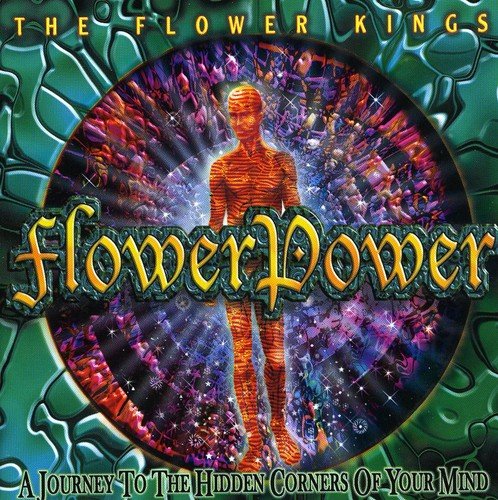
8. The Flower Kings - Flowerpower: This was one of the albums that Transatlantic led me to, and was my introduction to the group. At over two hours of music, it’s a lot to take in at once, but in terms of quality material it stands as one of my favorite Flower Kings releases.


7. King Crimson - The ConstruKCtion of Light: The detuned vocals that opened lead track “Prozac Blues” clearly announced that this would be a unique iteration of Crimson. Once the initial shock wore off, however, The ConsctruKCtion of Light proved its legitimacy in the band’s catalog.


6. Aimee Mann - Bachelor No. 2: I admit that my reception of this album was a bit lukewarm in 2000, mainly because I was disappointed that Jon Brion’s (whose work I was obsessed with thanks to The Greys) fingerprint was not as prominent as it had been on its predecessor I’m With Stupid.  Time has been incredibly kind to it, though, and although clearly being associated with the year 2000 in my mind, Bachelor No. 2 has also transcended this time, earning “classic” status.


5. Kevin Gilbert - The Shaming of the True: This is an incredibly heartfelt rock opera by one of the industry’s most tragically unrecognized musicians. Gilbert passed on before it was completed, but Nik D’Virgilio of Spock’s Beard compiled and released it posthumously, allowing Gilbert’s unique genius to shine brightly one last time.


4. Porcupine Tree - Lightbulb Sun: I was gobbling up Porcupine Tree during this period, and I know that I also was into The Sky Moves Sideways, Signify, and Voyage 34 in 2000. Lightbulb Sun, the immediate successor to the pristine Stupid Dream, was the standout.


3. Dream Theater - Scenes from a Memory: This still stands in my mind as Dream Theater’s finest moment, where it seemed as if they might evolve into something beyond prog-metal. Alas, they fell into the trap of their own nostalgia and have never quite recapture the magic of this great rock opera.


2. The Flaming Lips - The Soft Bulletin: In 2000, this album was nothing short of magical. I spent a whole summer driving around Denton with this gleefully blasting out of my car windows.


2000 Album of the Year
1. Chomsky - A Few Possible Selections for the Soundtrack of Your Life: If you were around me at all in early 2000, I guarantee that I tried to get you to listen to this album. I loved everything about it - its energy, its angularity, its quirkiness, its intelligence, and its surreal album art.

Thursday, November 26, 2015

Layers of Thanksgiving: "Junun" Over Dinner

I was really looking forward to having a full week for Thanksgiving this year. I would have some quality time with the wife and kid before I went down for the big annual event on Padre Island with the extended family. Inevitably, having a lot of free time with the Little One eventually results in a little Netflix-for-Kids, and I was very surprised to find that there were absolutely no thanksgiving specials up. Not a one. There were, however, lots and lots of poorly animated b-rate Christmas features. The best I could find was a grainy, third-party posting of A Charlie Brown Thanksgiving on YouTube. It has been up for a couple of years, as if no one cares enough to challenge its legality!


I think that this, along with the scads of Christmas sale ads popping up in my feed early in the week, caused me to be a little defensive about Thanksgiving this year. I have always felt that it is its own holiday with its own feeling, and I dislike the sense that it is increasingly becoming subsumed by consumerism related to a totally separate holiday.  I am starting to get the feeling Thanksgiving has devolved into nothing more than some time off to let the public get some shopping done.

Taking matters into my own hands, I organized my own little informal Thanksgiving dinner and invited my bandmates from Ethnos over. We are all super-busy, and as we get closer to the end of the semester it is safe to assume that we would only get to be more so. It seemed like a good opportunity to hang out before the holidays scatter us to the wind.

One catalyst for our conversation was Junun.  I acquired this album with the intent of listening to it on beach walk like I did with Barrett a few years ago.  Long before its recent release, a brief article about the cross-cultural collaboration that produced Junun generated quite a bit of personal excitement.  Its authorship is so complex that it took the whole staff at Waterloo Records to figure out where the CD was filed.

The most visible contributor is Jonny Greenwood of Radiohead fame, and going into the store I was aware that he was working with an Indian ensemble called the Rajastan Express. The surprise, however, was Shye Ben Tzur, an Israeli musician who is trained in Indian styles.  Although a superficial listen to the album doesn’t bring traditional Jewish music to mind, his songwriting contributions placed the album in the “Israel” section of the international music.

The album as a whole is really quite incredible - perhaps even compelling enough to be considered a very late contender for album of the year.  Superficially, it is easy to indulge in the exotic aspects of the album, but the harmonic environment provided by the guitar work and the subtle electronic atmospheres frame Junun’s “Indian-ness” within a decidedly contemporary field. Even more layered is Shye Ben Tzur’s Hebrew lyrics performed in ecstatic Indian styles. Certainly, with the current state of the Middle East, his identity structure makes a political statement that should be read as particularly relevant.


This statement was not lost on us. My bandmates are a very diverse group, with members from India, Taiwan, and Pakistan, and each of us had different perspectives about the way the various contributions of Junun fit into a cohesive statement. I was enthusiastic about its textural overlap with Kid A, while our tabla player nodded his head in approval to its roots in Indian street music. The exchange was as layered and engaging as the music itself.  As I have said many times in the past, I am very grateful for the opportunity to know and create with these outstanding individuals. Spending time and conversing with them, however, reminded me of just how thankful I am for having such open-minded and diverse friends.

Oh, and shameless self-promotion: The band's website is right here.  Check us out....

Thursday, November 8, 2012

The Jellyfish Family Tree Part 4: Falkner Knocks Me Down

Although the sign on my door said “Assistant Band Director,” I was taking an indulgent moment to cling to my past career as a rock star, and for that fleeting moment, I was feeling pretty confident. The refrain from Radiohead’s Street Spirit (Fade Out) was dying away in the speakers, and I had nailed it on piano by ear in the first run-though. I was actually quite impressed with the elegant simplicity of the song and, emboldened, I put in another favorite: Follow Me from Jason Falkner’s 1996 release Presents Author Unknown. As seemingly simple and catchy as the song was, I thought that I might have similar success.  I was dead wrong.

Follow Me by Jason Falkner on Grooveshark

Within the first twenty seconds, Falkner left me and my remedial harmonic piano vocabulary in the dust. I fumbled helplessly as it fiendishly twisted and turned through inversions and secondary dominants, and I simply could not keep up. By the song’s end, I wasn't even convinced I knew what key it was in, and what little confidence Radiohead had granted me had been shattered.

Falkner came to my attention on the suggestion of my friend Paul, the drummer for The Days, when I was playing with Fletcher.  I was not teaching regularly until after my stint as a semi-professional musician had ended, though, so I must have had  the album for quite awhile before this episode made me realize just how sophisticated it was. It ended up becoming an album that easily rivals Jellyfish’s original releases in terms of my esteem.


After this humbling piano encounter, I decided that I needed to examine the album further on a more familiar instrument, so I began to run through its tracklist on bass. This still took a little bit of note-taking. I began to realize that, despite being quite accessible, all of Falkner’s songs simmer with vast nuance just below the surface. Additionally, like on almost all of his solo work, Falkner plays virtually every instrument on Presents Author Unknown. The dedicated listener can find dozens and dozens of incredible compositional twists and masterful performances littered across the album’s short span.


There were lots of rumors in the Jellyfish fan base as to the details of Falkner’s split from Jellyfish, but they all seem to agree that, despite contributing an irreplaceable guitar voice to the group, he was an underutilized talent. In retrospect, I don't know that there was a good solution for incorporating him into the band. With a little imagination, I could imagine a couple of songs from Presents Author Unknown reinterpreted within the strict structures of Jellyfish’s identity, but overall, Falkner’s work has too much personality on its own to fit into Jellyfish’s retro-pop mission statement. Listening to Presents Author Unknown, it’s quite obvious to me that that he was that band’s George Harrison: a sparkling, innovative songwriter in his own right that simply did not have the space to shine between the interpersonal pressure of his bandmates.

Like many of these albums on the Jellyfish Family Tree, I have not listened to Presents Author Unknown in several years, and its exuberant energy and impossibly sophisticated songcraft still blows me away.  It is a criminally underrated power pop masterpiece that I would gladly put on my short list of desert island albums.

To go to the previous post in the project, click here
To jump ahead, click here. 

Wednesday, October 24, 2012

Knives Out: Grizzly Bear's "Shields" and Reinvention

In 2001, on an uninhabited stretch of road between Denton and Allen, I decided that Amnesiac was a bust. Radiohead had presented rewarding challenges with every album up to that point, but after struggling with it for quite awhile, I could not convince myself that the jarring differences between its burbling sound experiments and jagged songwriting would have a payoff like Kid A did. I shelved it and forgot about it

Several months later, however, during a rather innocuous set of standards, a UNT graduate jazz combo slipped in a genuinely moving rendition of Knives Out. It brought to my attention the song’s unsettling harmonic dissonance and challenged me to reconsider the original recording. Retrospectively, my opinion of Amnesiac is a bit higher (even though it’s still still one of Radiohead’s patchiest albums) but I view Knives Out as one of the finest songs in their oeuvre.


The combo that reframed the song for me earned my respect for focusing their intellectual and artistic energy on a song so obviously against the grain of jazz tradition. You don't often find that kind of idealistic innovation outside of the academic setting. Certainly, the audience for that sort of thing is quite limited and difficult to engage, especially back in the pre-YouTube era of the early 00s. These days, however, virtual music performances can sometimes serve as a creative venue for encounters like this.  One such performance played a role that led me to Grizzly Bear's most recent release.

Ever since I got Veckatimist last year, I have pondered Grizzly Bear’s deeper musical potentials. That album exhibited a level of musicianship that might indicate that there was more to them than meets the ear, but they are also indie darlings right now. Very often, indie sites have their own agendas that are not too dissimilar from the ones that guided record company promotional practices in the past. I have been very cautious about jumping on board the Grizzly Bear bandwagon simply because I want to make sure that I’m engaged by the band's musicality and not the hype that surrounds them. Therefore, when news of Shields started trickling through the feed, I was carefully interested. One night at Aikido Summer Camp, however, this video came up through my feed as I was getting ready to crash for the night.


Keep in mind, this guy isn’t even in the band, and he's not playing jazz.  Still, the amount of respect that this creative and skilled percussionist paid to Grizzly Bear in arranging an orchestrally-styled part to Sleeping Ute, a song that had not even been officially released yet, is a tribute to his belief in its broader intellectual potential.  For me, Shields went from being a curious interest to a must-have.

When it was finally released months later, it made an incredible first impression on me, so much so that I was afraid that it would burn brightly and proceed to collect dust. After being with it for awhile, however, I think that Grizzly Bear’s praise is mostly well-deserved. In addition to Sleeping Ute, I also connected almost immediately to Yet Again.


The production on this track, and on the album as a whole, captures an ambience that recalls Radiohead back in their early days when they were more like a band and less like a project (an identity shift that I think they were struggling with on Amnesiac). Listening to the laid-back, Keith Richards-esque strumming in this song, there is no question that Grizzly Bear’s music is generated by human hands. Additionally, their brilliant melodicism makes their work more inviting than that of Radiohead, sometimes reminiscent of Lindsey Buckingham’s quirky approach to pop songwriting. Lyrically and musically, however, they paint abstract, impressionistic pictures with the potential for multiple interpretations.


As an example, my first impression of Sun in Your Eyes, with its asymmetrical time signatures, rolling drumming, and desolate lyrics, was programmatic: a metaphor for a lonely, tumultuous sea voyage. I was a little disappointed to discover that there was scant lyric reference to support this imagery, but also impressed that this notion came entirely from the musical content.  My musical impression seemed quite clear, but the song's text pointed in a different direction.  Multimodal layers like this one can frequently be found in Grizzly Bear’s music, and the most interesting ones don’t always neatly coincide. Like Radiohead, they have ruptures between abstraction and clarity that leave lots of room for subjective interpretation, and therefore, creative reinvention.

Saturday, April 9, 2011

Flip Sides: "The King of Limbs" and Philip Selway

No one can fault Radiohead for maintaining their fierce musical independence.  Sometimes, they seem to put out albums specifically to challenge their fans.  Of course, we (their fans) would not be so fiercely loyal if OK Computer had been The Bends part 2.  By the time Amnesiac rolled through, I felt that their sonic experimentation had begun to cloud their accessibility, and I began to fear that they had jumped the shark.  It was difficult for me to exchange the incredible songs they delivered on their early albums for their increasingly Brian Eno-esque soundscaping.

On 2008's In Rainbows, the band seemed to emerge from experimentalism to an extent and returned to playing their instruments in a live setting.  Of course, having done that, and being Radiohead, they would have little reason to do it again.  The King of Limbs again sees the group delving into electronic territory, but I think that it is distinct from earlier efforts simply because what is sonically accepted as “electronic” has changed in the past five to ten years.


King of LimbsClearly, The King of Limbs is a bit of a throwback to their more conceptually dense and esoteric recordings, but I have been far more open to it than I was to Amnesiac.  In fact, I find it quite fascinating.  Songwriting is not totally abandoned on The King of Limbs: songs still lie at the core of every track.  The way the band accompanies these songs, however, is profoundly different than they have done in the past.  The clear-cut use of guitar riffs and drumset that is found in their more accessible work is replaced on The King of Limbs by a timbrally fantastic environment in which loops cast a hypnotic veil over song structure and whooshes of white noise have the same aesthetic value as pitched notes.  Thom Yorke sometimes contributes echoing layers of vocal sound, but never allows his lavender crooning to stray too far from its role as an expressive vehicle.  Simultaneously, bassist Colin Greenwood (who has long been Radiohead’s secret weapon) consistently provides melodic interest that is decidedly organic.


Each Radiohead album is probably best taken as a standalone project and accepted on its own merits, but any fan of the band will most likely have their favorites and where there are favorites, there are comparisons made to these favorites.  When the band is experimenting, some fans wish for The Bends, and when they focus on their accessible side, things are never as good as they were when Kid A was released.  The King of Limbs will, at the very least, take several listens before offering something to grab onto.  For fans of their more straight-ahead work, however, there is a solution that comes from within the ranks of the band itself.

Familial [+Digital Booklet]Last year, Radiohead’s drummer Philip Selway released an album of acoustic-ish songs called Familial.  Superficially, it seems like an acoustic guitar album….in other words, pretty much the exact opposite of The King of Limbs.  Despite being somewhat stylistically distant from this recent Radiohead odyssey, Familial succeeds admirably in many regards in what it sets out to do.

Selway has an obvious comfort with songwriter-style guitar that more pedigreed guitarists would envy.  Aside from this technical aspect of Familial, though, there is a fascinating production depth that challenges its superficial simplicity.  Subtle whispers, strings, and alien keyboard sounds enliven Selway’s breathy delivery throughout the entire recording.  These ornamentations are not necessary to the songs, but are integral to the experience.  As a result, Familial seems to capture a mood that might seem familiar to fans of Radiohead's early atmospheric work.


It stands to reason that Selway could make a compelling solo album.  When you have been mentored by Neil Finn, collaborate with members of Wilco, and um, are freaking in Radiohead, it seems that doing a solo album with idiosyncratic songwriting and production depth would be more than possible.  What is really impressive about Familial is not that Selway plays guitar so well, or that his voice has such character, or even that he writes such compelling songs.  What really blows my mind is that, according to interviews, when he started on the album, he “was not even sure if he could sing.”  Considering the results on Familial, I find his humility and gratitude for its success to be refreshing.